Kindergarten
Our programme
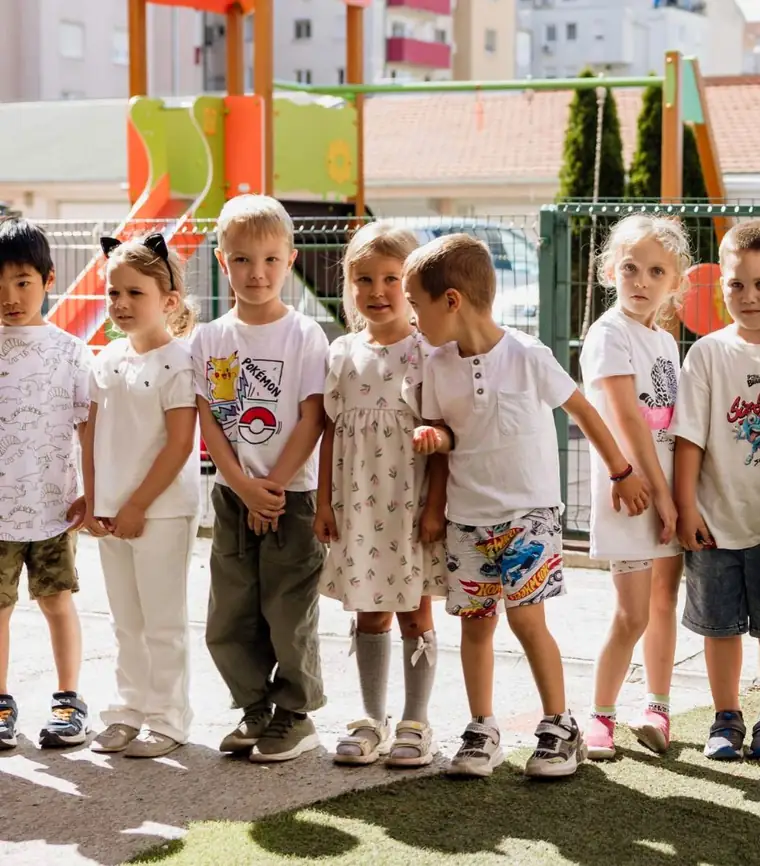
The project-based approach is part of our everyday way of working and learning, bringing together exploration, play, imagination, problem solving and learning through experience. Through different situations and activities, children explore, ask questions, share ideas and discover new things.
English topics for October: Animals: In my farm, Children of the World, Numbers up to 10 - 20, Goodbye Summer, Hello Fall, Let's wash our hands. For November: Opposites, My body, Left and right, Home sweet home, In the Zoo, animals.
Five age groups
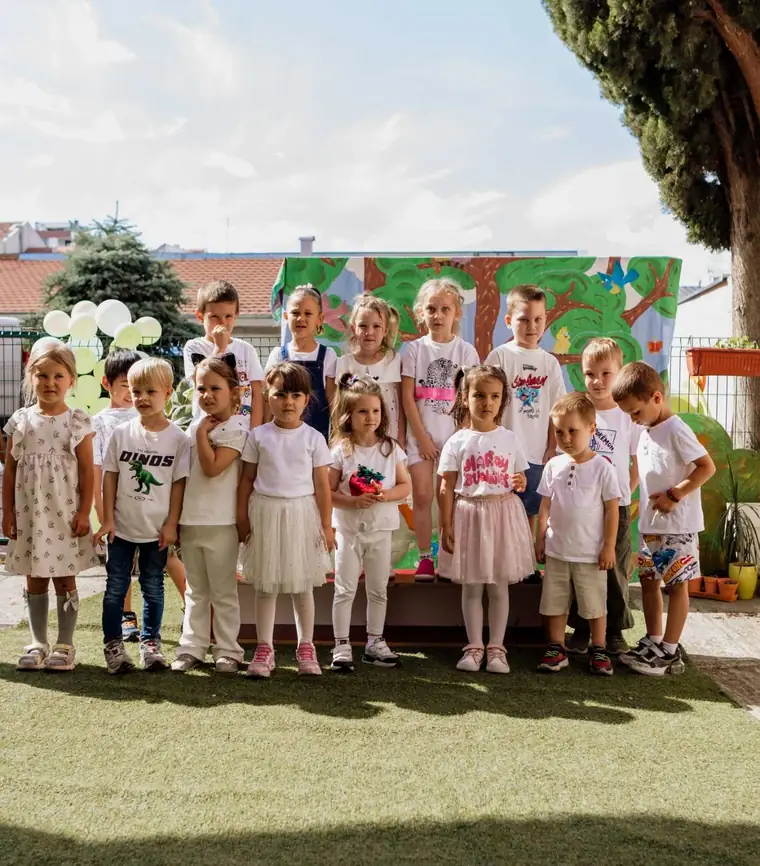
From the toddler group to starting school
Toddler group
1 – 2.5 years
Younger group
2.5 – 3.5 years
Middle group
3.5 – 4.5 years
Older group
4.5 – 5.5 years
Oldest group
5.5 – 6.5 years
Opening hours: weekdays 07:00–17:00.
Toddler group · 1 – 2.5 years
The youngest need care and teaching at once
In the toddler group the children are looked after by paediatric nurse-educators. We pay great attention to the period of settling in to kindergarten, whose length is adapted to each child, so that accepting a new environment is as easy as possible. With the youngest we plan motor, speech and music-and-rhythm games, as well as exploration — all for healthy growth and proper development.
2.5 – 5.5 years
Younger, middle and older group
Our work is based on the Serbian national preschool curriculum framework, “Years of Ascent” (Godine uzleta), and on a holistic approach to the child.
We see each child as a whole, unique and competent person — a child with their own ideas, interests, experiences and ways of learning. We respect their individuality and support them to explore, ask questions, express their opinions, make decisions and grow at their own pace.
Here, learning happens through play, exploration, conversation, movement, creativity and everyday life situations. Children are not just taking part in activities — together with their teachers they help shape the programme, choose the topics that interest them, explore, connect their experiences and discover new things.
We pay special attention to relationships, space and experiences that allow children to be active, independent, curious and creative. We design our environment so that it invites children to play, explore, cooperate and express themselves in many different ways.
Through themes and projects that grow out of the children's own interests and experiences, we bring different ways of learning together. So a child talks, explores, counts, builds, draws, sings, moves, solves problems, cooperates and creates — all at the same time.
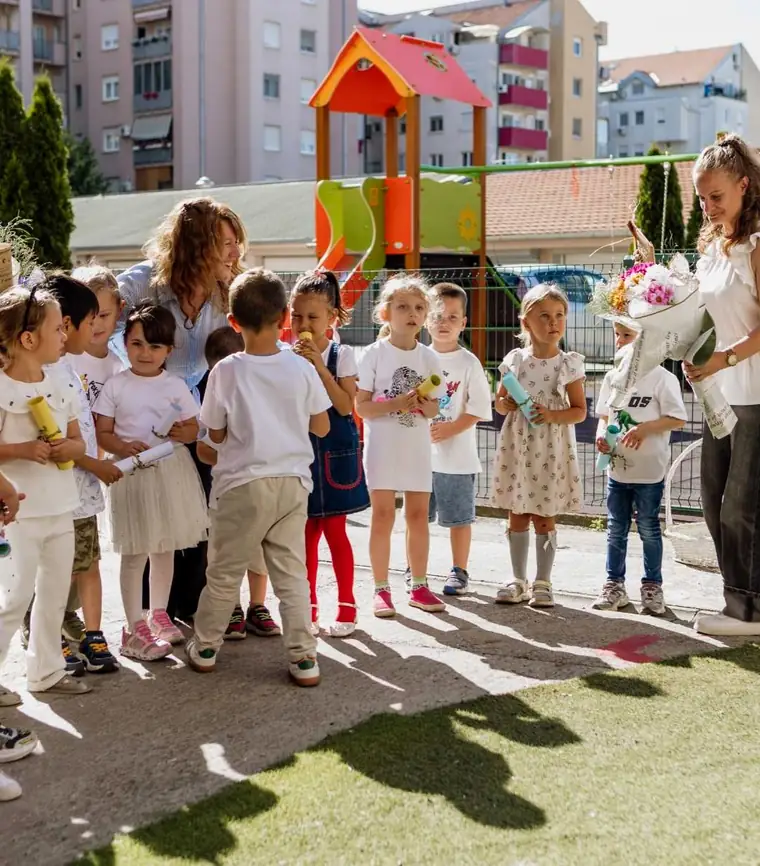
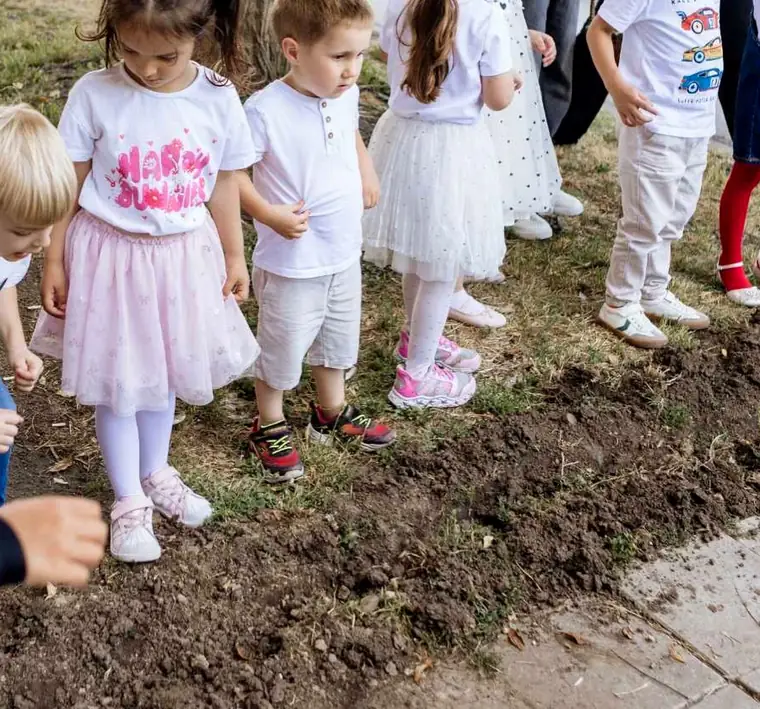
An important part of our programme is learning through first-hand experience — time in nature, outings, visits, and getting to know the local community, different professions, culture and the world around the children.
Together with families we create an environment in which a child feels safe, accepted and encouraged to explore and learn. We welcome the family as an important partner in the life of the kindergarten. We organise get-togethers and parent visits, through which the children learn about their parents' professions, knowledge and experience.
Our goal is not only what a child will learn, but what kind of learning experience they will have — to be curious, free to ask and explore, to believe in themselves, to work together with others and to discover the world with joy.
Preparatory preschool programme
The oldest group
The preparatory preschool programme starts on 1 October. On completion, the child receives a certificate of completion of the preparatory preschool programme, which is required for enrolment in primary school.
Children develop their physical, social, emotional, intellectual and motivational maturity through:
- encouraging independence
- supporting physical development
- strengthening social and emotional skills
- supporting cognitive development
- nurturing curiosity
- respecting individuality and encouraging creativity
The programme covers:
Speech development
speech and sound culture, vocabulary building, reciting, reading, speaking through movement and rhythm
Early literacy
elementary reading and writing
Early mathematics
position in space, comparison, shapes, sets and a sense of time
Nature and society
the living world, people's occupations, family and relationships with others, ecology and road-safety education
Physical education
physical development, perception, hygiene habits, gross and fine motor skills
Art
drawing, painting, developing creativity and free artistic expression
Music
listening, singing, playing and dance
Children's self-esteem
We run a programme for encouraging children's self-esteem, by Iboja Gera MSc and Ljubica Dotlić MSc, aimed at building basic moral values:
- nurturing children's self-confidence
- building positive emotions and a positive self-image
- encouraging the right to their own privacy
We carry it out through workshops and games that include parents, and it has three parts:
Family scrapbook
involves parents, to encourage and strengthen family ties and respect within the family
Personal treasure box
a child's right to their own privacy
Scroll of children's rights
a child's right to their own individuality and identity
Working with families
The kindergarten works closely with parents through:
- one-to-one conversations with our specialist staff, whenever a parent wishes
- parents' meetings
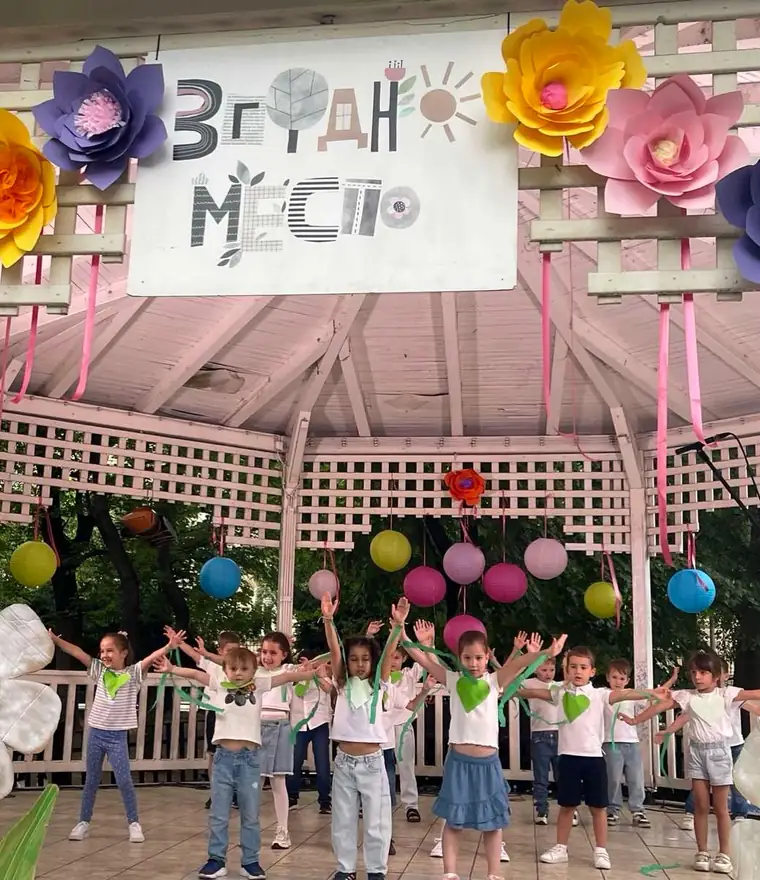
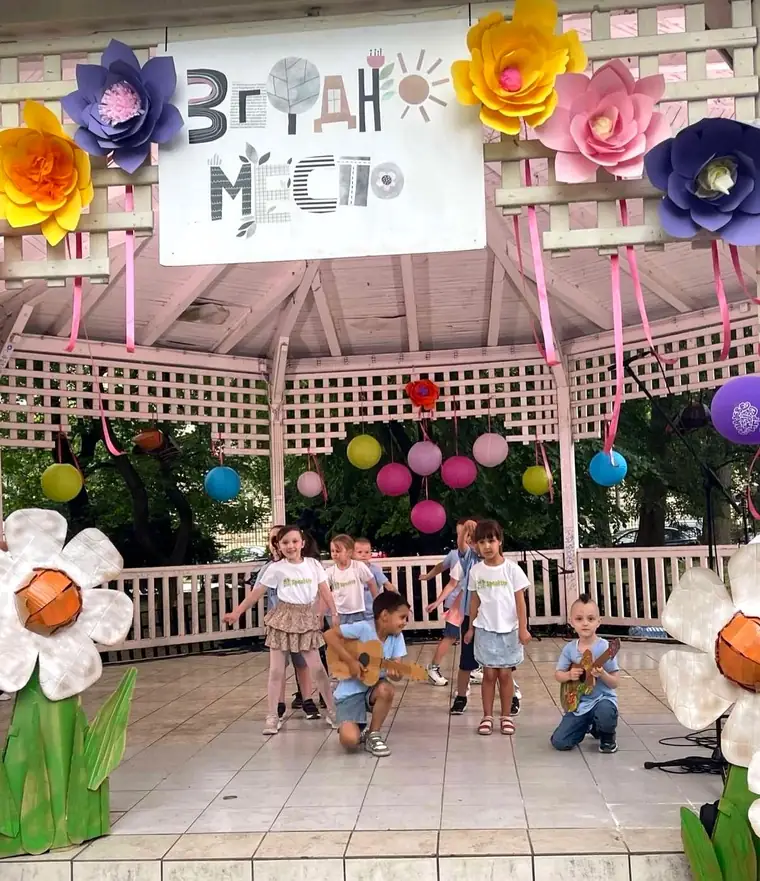
- performances at the kindergarten and public appearances in the city during events
- joint workshops for children and parents
- the end-of-year performance of the oldest group
and indirectly:
- exhibitions of children's work on the kindergarten boards
- information boards for parents
